
Why Do Cats Arch Their Backs When You Pet Them? 7 Common Reasons Explained
Daily cat care tips, breeding guidance, and disease prevention manuals. Today, while petting my cat as usual, I suddenly noticed something:
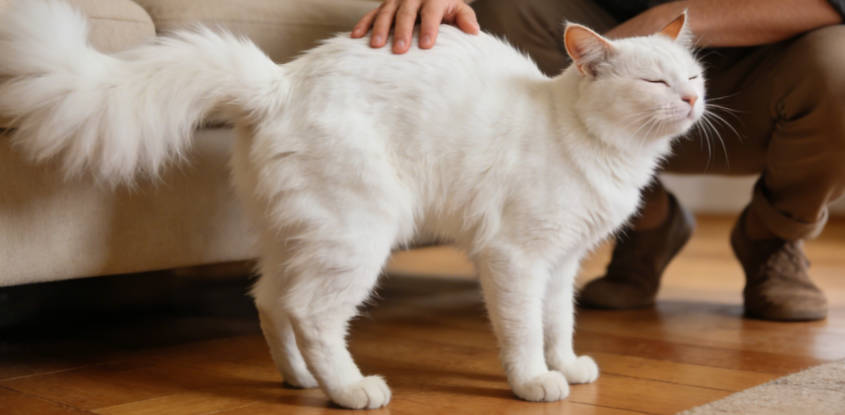
When stroking from head to back, some kittens involuntarily arch their backs, looking absolutely adorable and eager!
So, why do they do this?
Expressing Pleasure and Satisfaction
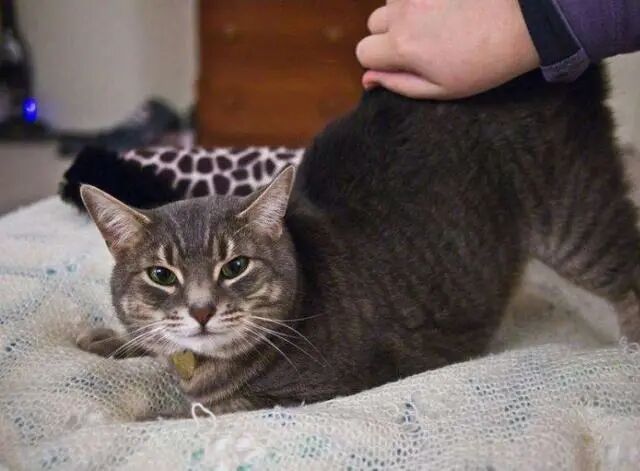
In most cases, when you pet a cat, it will arch its back and actively respond to your touch. It often adjusts its position to guide your hand to its favorite spots, allowing it to enjoy the pleasure of being petted in the most satisfying areas.
Besides arching its back, you can also sense the cat's contentment through other behaviors, such as purring, slow and steady breathing, neutral ear and whisker position, and slow, small tail movements.
So, what other meanings does a cat's arched back have?
Stretching the Body
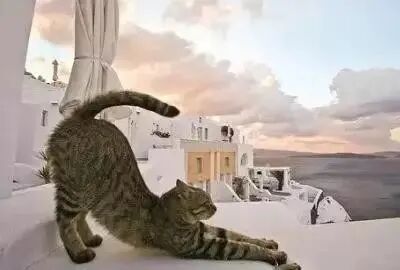
This reason is easy to understand, just like how we stretch when we wake up. When a cat stays in one position for a long time while sleeping or lying down, its body can become numb. To feel more comfortable, cats also stretch, making arching or pressing down movements with their backs.
Anger
When a cat is angry, it will also arch its back. This behavior serves as a warning (telling you it's angry) and increases its intimidating appearance (making itself look bigger).
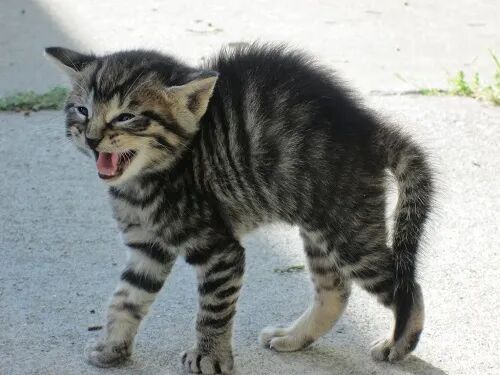
A cat's angry expression is very obvious and easy to distinguish, mainly including:
① Arching the back
② Puffed-up fur
③ Narrowed eyes
④ Ears flattened to the sides
⑤ Tail curved downward
⑥ Hissing, growling, or complaining
The key point is that the next step is preparing to attack, with the body leaning forward or advancing step by step.
Fear
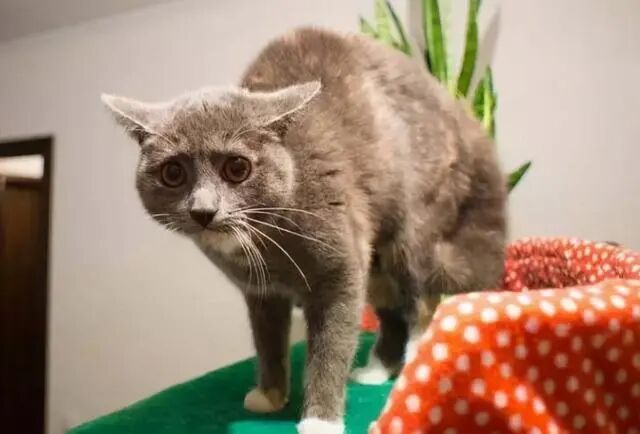
Yes, cats also arch their backs when they're afraid, and the expression is very similar to anger. The difference lies in the cat's situation, motivation, and certain body movements.
When a cat is afraid, its emotion is calmer than when it's angry:
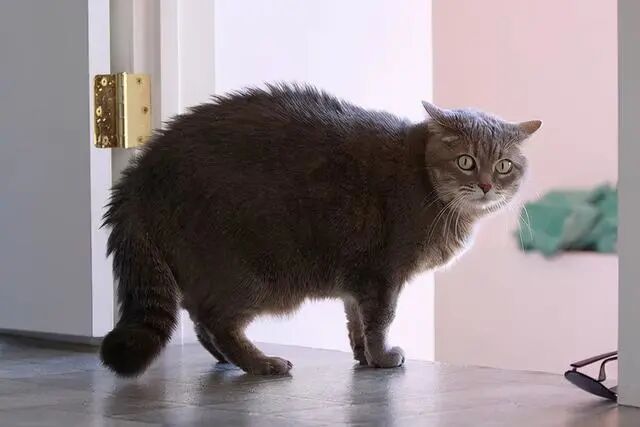
From the image above, we can clearly see that the cat also has an arched back, puffed-up fur, downward tail, and backward ears, but the emotion revealed in its expression is relatively calm, not as excited. The subtle body language is expressed as:
① Hind legs slightly crouched downward, ready to run away
② Eyes wide open, very alert, staring intently at what makes it afraid
③ Mouth tightly closed, showing tension
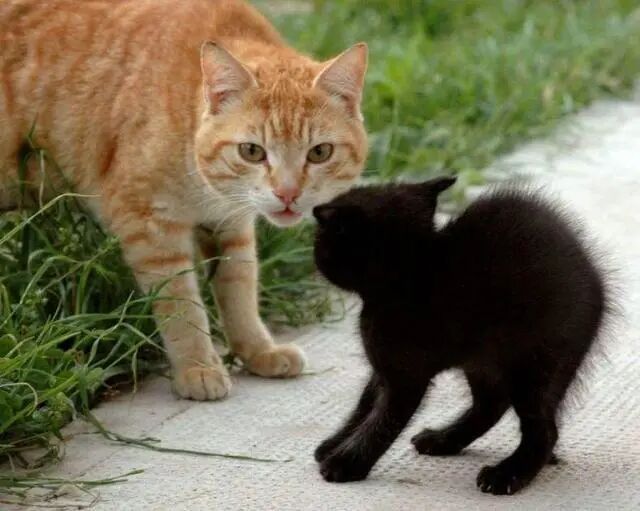
Let's take another example: the black cat in the picture is also afraid. Although it has an arched back, puffed-up fur, and backward ears, its body is leaning backward with slightly bent hind legs, ready to run away at any moment.
Startled
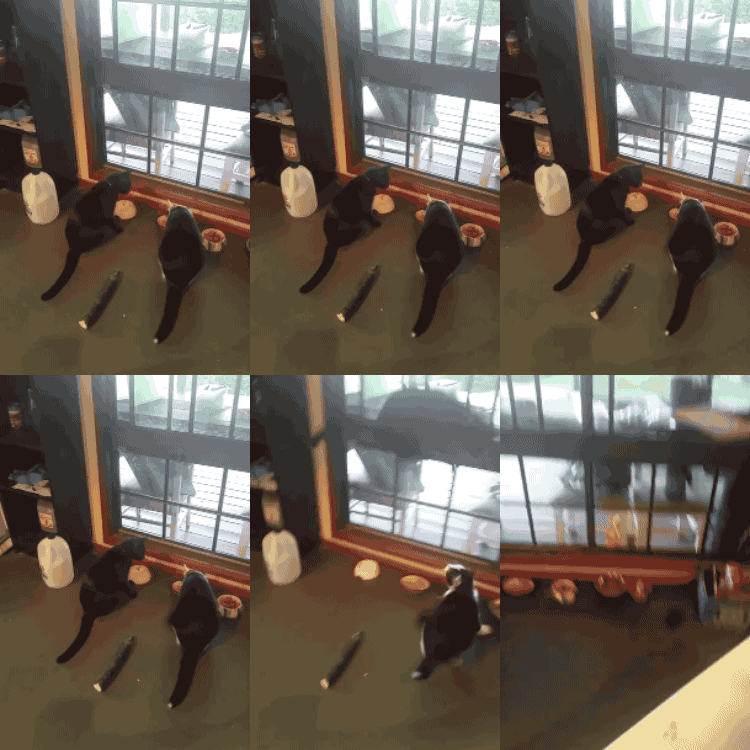
When a cat is suddenly startled, it usually jumps and also arches its back. This arching occurs together with the jump, which is an instinctive stress response that happens almost instantly when the cat is surprised.
Hunting
This is a cat's hunting preparation pose. To have more room to exert force, the cat's legs bend significantly toward the abdomen, similar to a run-up, which naturally causes the back to arch. This is mainly to "store energy" so that it will have more explosive power when jumping or sprinting, increasing the success rate of hunting!
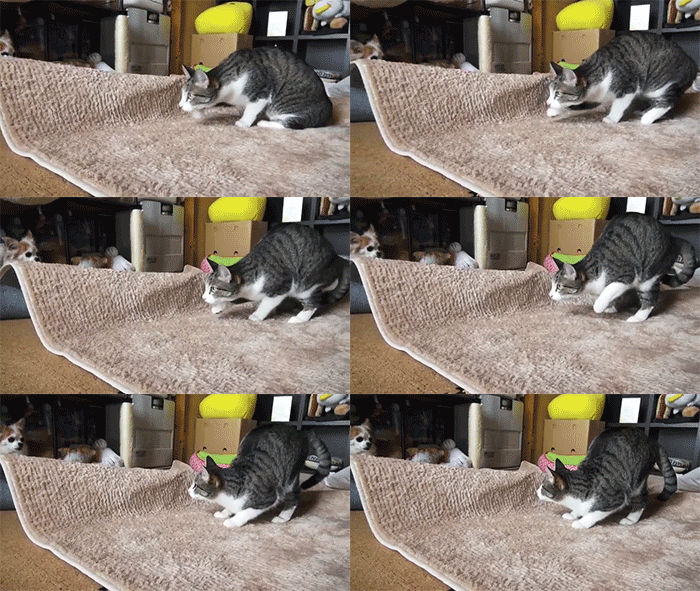
It's really too cute!! Can't help but add one more picture~
Play and Practice
Cat owners with kittens should have a better understanding of this. Kittens will run around with arched backs for no obvious reason, seeming nervous. This is actually a signal that the cat is inviting you to play, wanting to experience the fun of hunting play.
If you have two or more kittens at home, this situation will be very common. Two kittens chasing each other with puffed-up fur and arched backs is also a process of practicing hunting!
At this time, don't forget to play with your cat for a while!
Discomfort
The arching mentioned above is all temporary, but if a cat walks with a consistently arched back, that's definitely not right.
The cat may be sick or injured, including abdominal pain, limb injuries, sprains, strains...
In severe cases, it could be abnormal cartilage ossification development, causing the cat to have movement disorders. Obvious symptoms include hind limb lameness, frequently lifting a paw, arched back, and walking like it's on stilts.
If something seems wrong, it's best to take it to the hospital for a check.
However, don't worry too much. Most of the time, a cat's arched back is a very normal behavior!
By PanpanUnderstanding your cat's body language is key to building a strong and healthy relationship with your feline companion.








David Chen
March 12, 2025This article was incredibly insightful! I always wondered why my cat arches her back when I pet her, and now I understand the different reasons. It's fascinating how this behavior can mean so many different things depending on the context.
ReplySarah Johnson
March 11, 2025Great information! I especially appreciated the section about distinguishing between fear and anger. My cat sometimes arches her back when strangers visit, and now I can better understand what she's feeling. Thank you for sharing this knowledge!
Reply