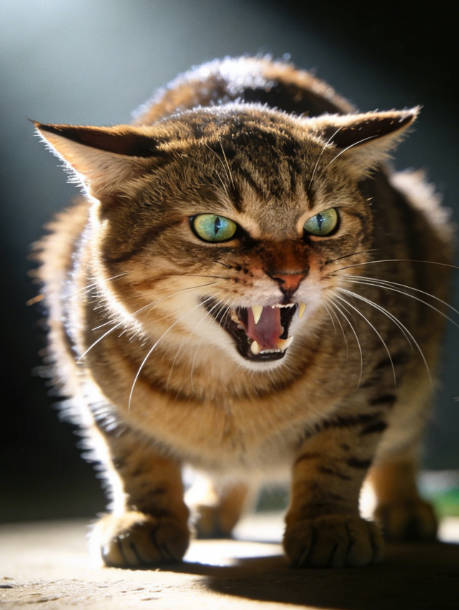
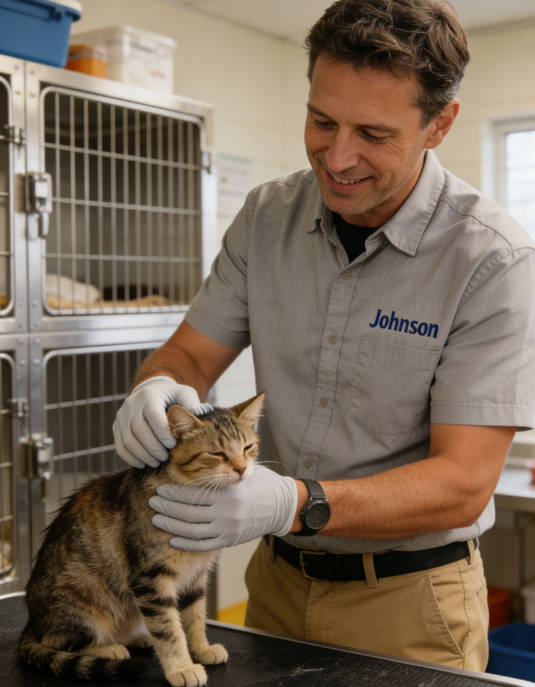
Cat owners are probably very familiar with a cat's hiss. Honestly, it’s not particularly intimidating; often it even comes across as cute yet fierce. However, have you noticed that a cat's hiss sounds remarkably similar to a snake’s hiss?
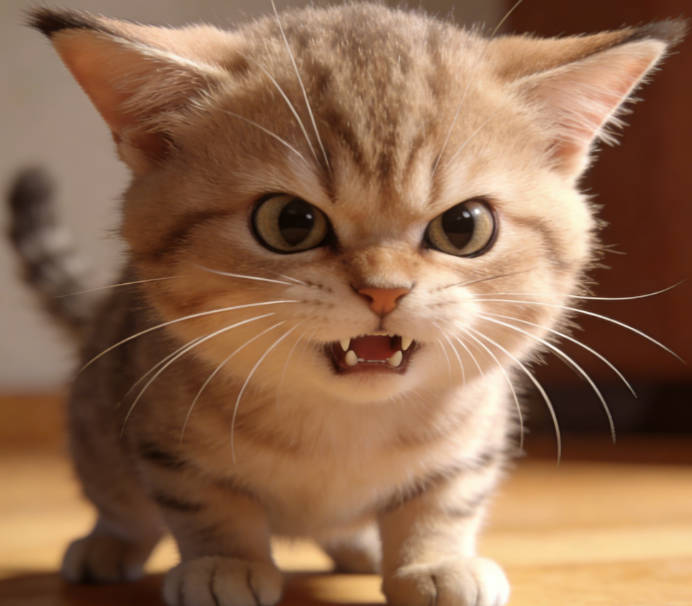
Does this mean cats learned hissing from snakes? Today, we explore why cats hiss and what it represents. Studies indicate that when the hypothalamus in a cat’s brain is stimulated above a certain threshold, the cat emits a hissing sound. The hypothalamus is a small but important region, connecting the nervous system and endocrine system, controlling the pituitary gland, which releases hormones into the body. Research on felines shows that hissing can be a precursor to defensive or predatory behavior.
Territorial and Predatory Significance
One meaning of a cat’s hiss is to deter threats: a warning that it should not be provoked. Many behavior experts suggest that cats may actually mimic snakes. Mimicry is common in nature; animals imitate predators’ sounds or visual cues to increase deterrence.
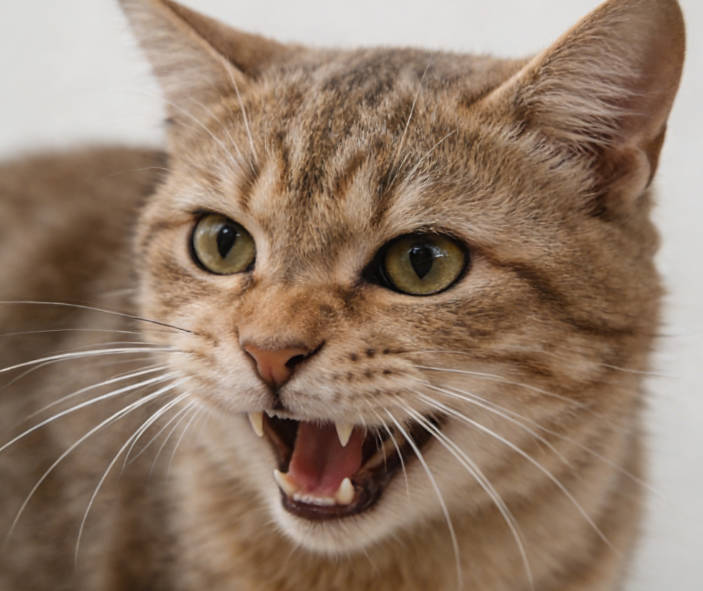
Why do cats mimic snakes specifically, and not other animals? Most likely, this comes from their ancestors living in desert environments, where they were no match for venomous snakes. While cats may have an advantage in physical attacks, they are vulnerable to chemical attacks from venom. Snakes in the desert are often well-camouflaged and strike rapidly with potent venom, posing a real threat to cats. As a result, one of the natural predators of ancestral cats was snakes, and their hissing behavior may have evolved as a form of mimicry.
This mimicry, known as protective mimicry, involves imitating a more dangerous animal to maintain safety. Cats’ mimicry is not limited to sound; their body language often imitates snakes: flattened ears, arched back, vigorous tail movements, resembling an angry snake prepared to strike. In the cat’s mind, it may feel empowered by this resemblance.
Situations in which warning hissing occurs include:
- 1. Territory infringement, such as a new cat entering the home
- 2. Predatory attacks, when encountering smaller prey
- 3. Maternal defense, when a mother cat protects her kittens and faces potential threats
Defensive Significance
In many cases, hissing is not for deterrence but for defense. Cats generally prefer to avoid conflict, escaping when threatened rather than initiating aggression. When trapped with no escape route, the cat engages its defensive mechanisms: curling up in a corner, hissing at the threat, and, if necessary, performing defensive actions to protect itself.
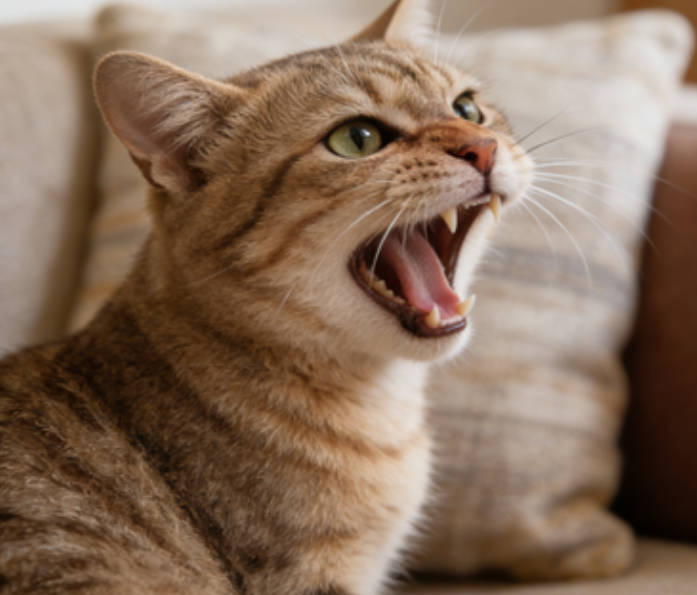
Situations triggering defensive hissing usually include lack of security or perceived threat: being touched by a stranger, encountering unknown people or animals, or being startled unexpectedly.
How to help your cat remain calm:
- 1. Give it time to relax
- 2. Provide escape routes unless interaction is necessary, ensuring the cat does not feel cornered
- 3. Before touching, let the cat get used to your scent
- 4. Never punish hissing, as this increases fear
- 5. Identify triggers causing stress and apply positive behavior strategies to create a more comfortable and relaxed environment
Expression of Irritation
Hissing can also indicate irritation or annoyance. Have you ever experienced:
- 1. While petting a cat, it suddenly flips and hisses, breaking free from your hold?
- 2. During nail trimming, initially calm, then hissing and growling?
- 3. Displeasure or defiance when scolded?
When a cat feels annoyed or stressed, hissing communicates: 'Please leave me alone.' This is their way of expressing a desire for personal space and quiet.
No matter the reason—warning, defense, or irritation—hissing serves as a reminder to respect a cat’s private space and avoid over-stimulating it. Providing a safe, secure, and comfortable environment helps the cat feel calm and protected, reducing the need for hissing as a communication tool.
Comments (50)
Pet Lover
Great article! Very informative for pet owners.
Cat Parent
Thank you for sharing this helpful information!