First, watch the video:
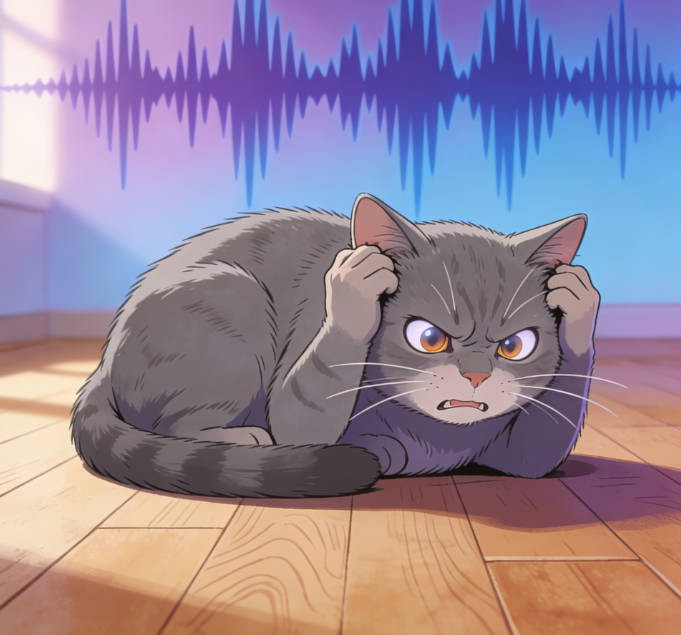
In the video, the cat clearly becomes very uncomfortable when hearing the sound of its owner scraping a comb, seeming to be unable to control nausea. Moreover, it’s not just comb sounds; even tearing tape can make cats feel nauseous.
Why does this happen?
Actually, this is known as 'Auditory Reflex Seizures' (FARS)!
Mild cases may cause nausea, while severe cases can even lead to full-body convulsions and foaming at the mouth!
Today’s content: ① What is Auditory Reflex Seizures ② Which sounds cats are sensitive to and how to respond.
What is Auditory Reflex Seizures?
Auditory Reflex Seizures, also called FARS, occur when the brain’s neurons become excessively excited and discharge abnormally, leading to spasms, stiffness, and loss of control. As the name suggests, hearing certain sounds can stimulate the brain and trigger seizures.
When a cat experiences FARS, the symptoms vary by severity:
△ Mild cases:
- 1. The cat freezes: It may appear as if the cat is simply staring, but in fact, it experiences a brief loss of consciousness! This usually lasts a few seconds and is difficult for owners to notice.
△ Moderate cases:
- 1. Frightened expression, ears flattened like airplane ears, whiskers tense, pupils dilated, twitching
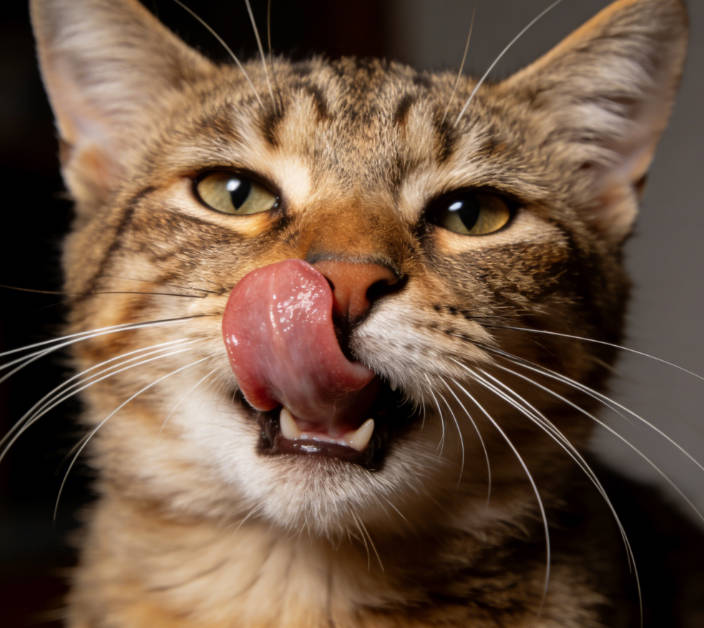
- 2. Uncontrolled tongue movements, licking, gagging, or vomiting
In short, mild reactions may result in involuntary local muscle contractions.
△ Severe cases:
- 1. Full-body tonic-clonic seizures!
This is the most dangerous stage. Cats may injure themselves lightly by hitting or biting themselves; in severe cases, seizures can be fatal!
A study published in the Journal of Feline Medicine and Surgery showed:
- 1. Older cats have a higher incidence of FARS; average onset age is 15 years.
- 2. FARS can occur in any breed, but some breeds, such as Birman and Maine Coon, are more susceptible.
- 3. The severity of the reaction can be related to the decibel level; louder sounds may trigger more severe reactions.
- 4. Even hearing-impaired or deaf cats may react to certain high-frequency sounds.
Sounds Cats May Be Sensitive To:
Besides comb scraping, cats may react to various sounds:
- 1. Crumpling aluminum foil
- 2. Metal spoon hitting a bowl
- 3. Knocking on glass
- 4. Keyboard typing and mouse clicks
- 5. Coins or keys clinking
- 6. Hammering nails
- 7. Tongue clicks or lip smacks
- 8. Stove ignition, phone rings, tearing velcro, tape, or plastic bags
Of course, every cat’s sensitivity threshold differs. For example, in a study of 96 cats, 61 cats reacted to keyboard typing, but some cats may be completely unaffected.
Therefore, we must pay attention to the cat’s reactions. If a cat shows abnormal behavior or seizure signs due to certain sounds, avoid making those sounds near them. While some sounds are unavoidable, minimize exposure whenever possible.
Handling Severe Seizures:
It is best to take a clear video to help the veterinarian understand the cat’s condition.
- 1. Do not pick up, shake, or restrain the cat.
- 2. If the cat is on a high place, carefully move it to the ground to avoid falls.
- 3. Ensure the cat’s airway is clear during vomiting. Clean vomit to prevent choking.
- 4. Calmly record seizure details:
- Any abnormal behavior before the seizure
- Behavior during the seizure
- Duration of the seizure
- Status during the seizure (consciousness, vomiting, etc.)
- Single or repeated episodes, interval between episodes
- 5. After the seizure, seek veterinary care promptly to identify the root cause.
For mild reactions such as gagging, vomiting, or brief freezing, calm the cat afterward and identify the cause. Avoid deliberately triggering these sounds again.
Finally, never treat this as entertainment! Many people intentionally provoke cats to have reflexive seizures for videos, which often go viral, encouraging others to imitate and harming more cats.
Spread awareness: Cats should never be used as tools for entertainment or profit. Their well-being is the priority.
Comments (50)
Pet Lover
Great article! Very informative for pet owners.
Cat Parent
Thank you for sharing this helpful information!